

We specialize in organizing bus tours and excursions that highlight Crete’s rich culture, stunning landscapes, and warm hospitality.
Our dedication lies in crafting unique and memorable journeys that transcend conventional tourism.
9 Hours
Free Pick-Up & Drop Off
English Greek
Free cancellation 24 hours prior the pick up time
Join us for an unforgettable excursion to Knossos Palace & Heraklion city, where history and culture come to life. Explore the legendary Palace of Knossos, the heart of the Minoan civilization, and uncover the myths of King Minos and the Labyrinth. Then, discover Heraklion’s vibrant city center, with its lively streets, historic landmarks, and local flavors. This experience perfectly combines ancient history with modern Cretan charm in one memorable day.
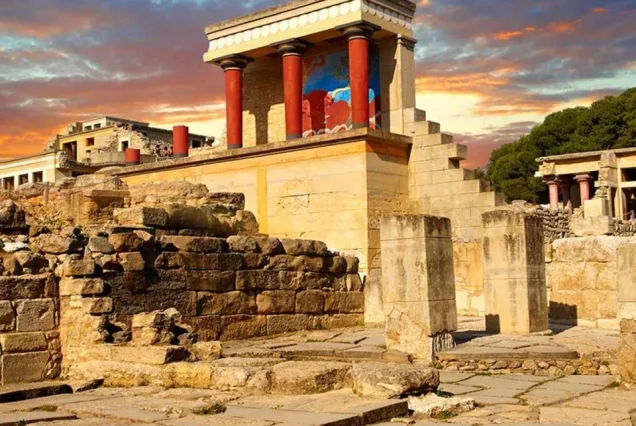
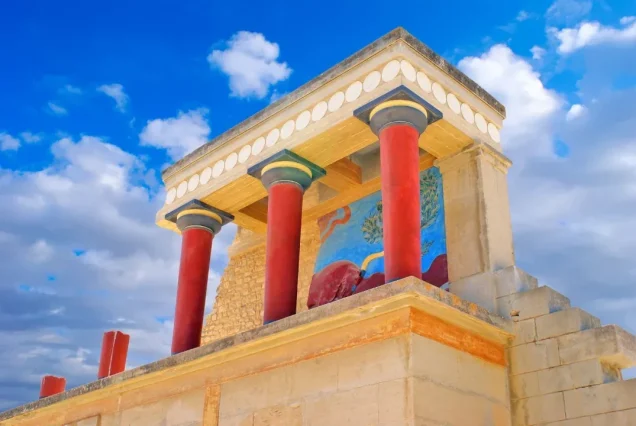
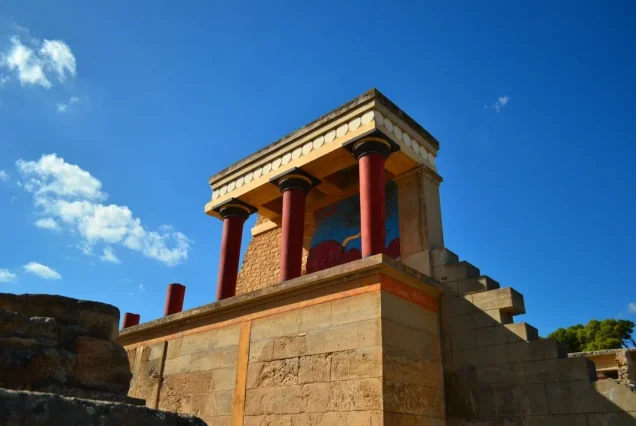
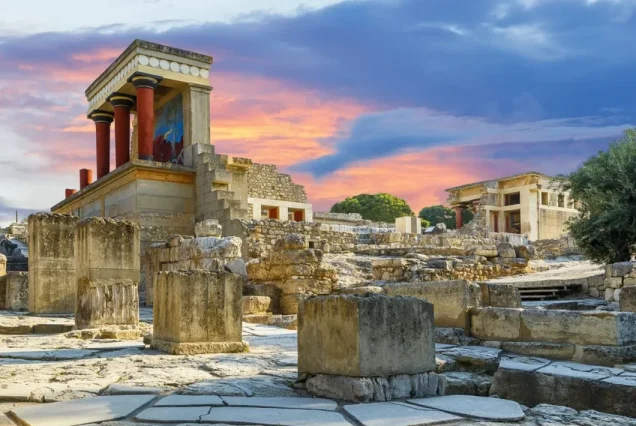
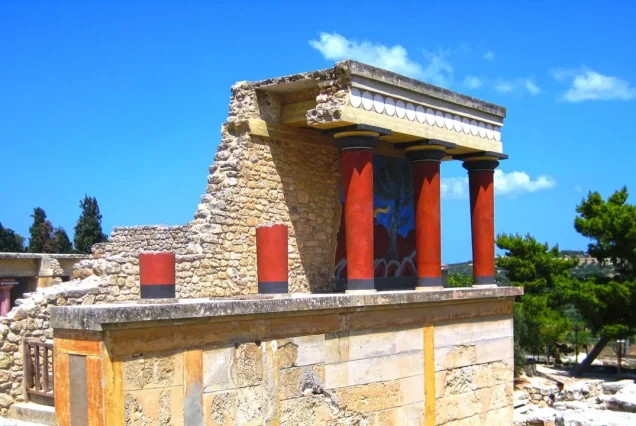
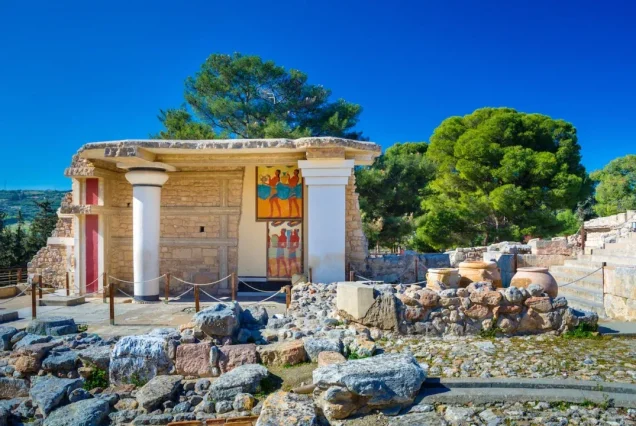
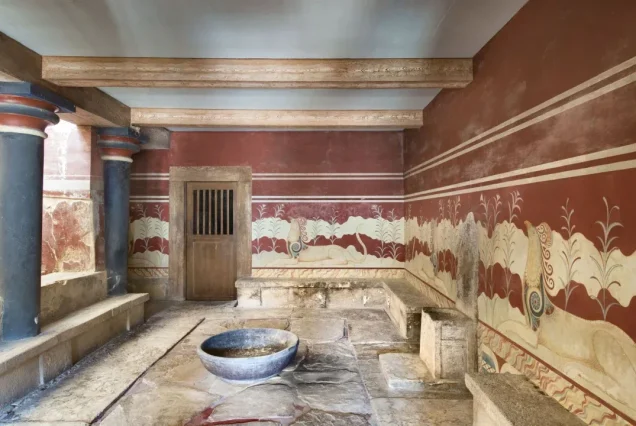
Knossos Palace, located near Heraklion City, is Crete‘s most visited archaeological site and a must-see for history and mythology enthusiasts. The ancient site offers a chance to explore the Minoan civilization and learn about the legendary myths of the Minotaur and the Labyrinth. Excavated first in 1878 by Minos Kalokerinos and later fully uncovered by Sir Arthur Evans between 1900 and 1930, Knossos features stunning frescoes, ancient pottery, and the famous Throne Room, shedding light on Minoan art, culture, and politics. The Minoan civilization ended after the eruption of the Santorini volcano, but its legacy lives on. A guided tour with a professional archaeologist brings the history and myths of Knossos to life, offering a deeper understanding of this ancient palace and its significance.
We start our journey with a convenient hotel pick-up, ensuring a smooth and easy start to your exciting day trip. Sit back and relax as we head towards Rethymno city, where we make our first stop for a scenic breakfast above the city. Enjoy the stunning views of the surrounding landscape as you fuel up for the day ahead.
Next, we continue our journey to Knossos Palace, one of the most iconic archaeological sites in Crete. From 10:30 to 12:30, you’ll be guided by a professional archaeologist, who will lead you through the ruins of this ancient palace. As you explore, you’ll learn about the legendary Minotaur and the Labyrinth that have captivated imaginations for centuries. The Minoan civilization, which flourished here, is brought to life as you admire the vibrant frescoes, ancient pottery, and the incredible Throne Room. The palace’s ruins provide an insightful glimpse into the grandeur of this ancient culture.
After your exploration of Knossos, we make our way to Heraklion City, where you’ll have 2 to 2.5 hours of free time to either enjoy a traditional Cretan lunch or visit the Archaeological Museum of Heraklion. The museum is home to some of the finest Minoan artifacts, offering a deeper understanding of the civilization that once called this island home. Whether you’re savoring local cuisine or exploring the museum, this stop offers a perfect opportunity to immerse yourself in the rich history of Crete.
Heraklion was Europe’s fastest growing tourism destination for 2017, according to Euromonitor, with an 11.2% growth in international arrivals. According to the ranking, Heraklion was ranked as the 20th most visited region in Europe, as the 66th area on the planet and as the 2nd in Greece for the year 2017, with 3.2 million visitors[7] and the 19th in Europe for 2018, with 3.4 million visitors.
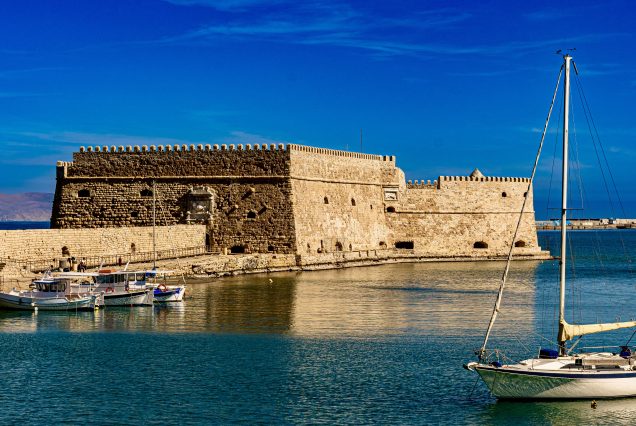
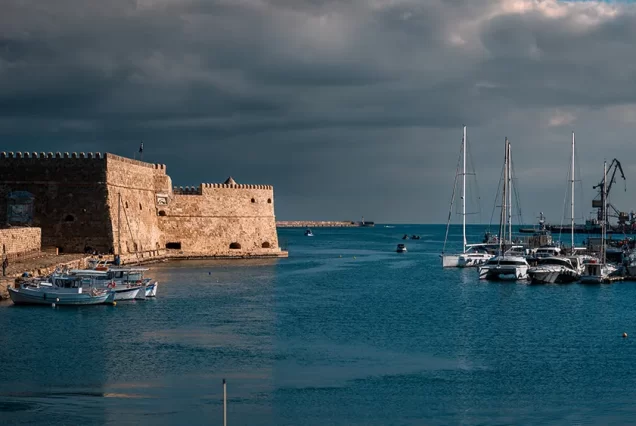
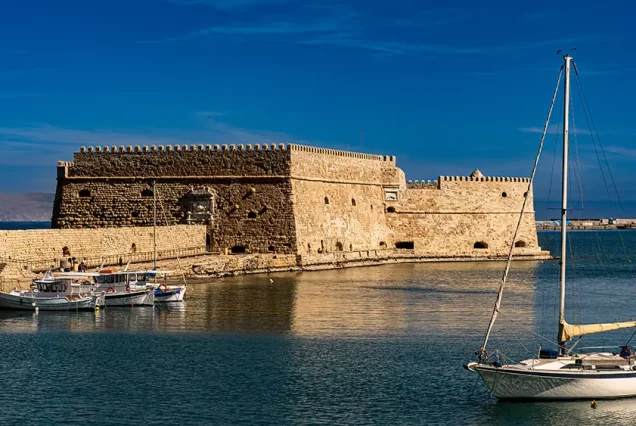
In 1204, the city was bought by the Republic of Venice as part of a complicated political deal which involved, among other things, the Crusaders of the Fourth Crusade restoring the deposed Eastern Roman Emperor Isaac II Angelus to his throne. The Venetians improved on the ditch of the city by building enormous fortifications, most of which are still in place, including a giant wall, in places up to 40 metres (130 ft) thick, with seven bastions, and a fortress in the harbour. Chandax was renamed Candia and became the seat of the Duke of Candia, and the Venetian administrative district of Crete became known as “Regno di Candia” (Kingdom of Candia). The city retained the name of Candia for centuries and the same name was often used to refer to the whole island of Crete as well. To secure their rule, the Venetians began in 1212 to settle families from Venice on Crete. The coexistence of two different cultures and the stimulus of the Italian Renaissance led to a flourishing of letters and the arts in Candia and Crete in general, that is today known as the Cretan Renaissance.
During the Cretan War (1645–1669), the Ottomans besieged the city for 21 years, from 1648 to 1669, the longest siege in history up until that time. In its final phase, which lasted for 22 months, 70,000 Turks, 38,000 Cretans and slaves and 29,088 of the city’s Christian defenders perished.[23] The Ottoman army under an Albanian grand vizier, Köprülü Fazıl Ahmed Pashaconquered the city in 1669.
On our way back, we’ll take a short break to relax before returning to your hotel. You’ll arrive back at your hotel around 18:00-18:30, having experienced a day full of history, culture, and the timeless myths of ancient Crete.
Enjoy a scenic breakfast above Rethymno City, with stunning views of the landscape to start your day in the best way possible.
Explore the iconic Knossos Palace, one of Crete’s most famous archaeological sites, and uncover the secrets of the ancient Minoan civilization.
Learn about the legendary Minotaur and Labyrinth with a professional archaeologist guiding you through the historical ruins of Knossos Palace.
Admire vibrant frescoes and ancient pottery that offer a glimpse into the art and daily life of the Minoans at Knossos Palace.
Enjoy free time in Heraklion City, where you can choose between a traditional Cretan lunch or a visit to the Archaeological Museum of Heraklion, home to fascinating Minoan artifacts.
Relax on the return journey, with a short break before heading back to your hotel, having experienced a day full of Crete's rich history, culture, and mythology.
we pick you up from your hotel, at our pick up points our guide will fill you in with imformation about our trip.
On the national road outside Rethimno we stop for 30 minutes to have breakfast.
Upon arrival at the Palace of Knossos our professional archaeologists-guide will guide you for 2 hours .The guiding is in English language.
We specialize in organizing bus tours and excursions that highlight Crete’s rich culture, stunning landscapes, and warm hospitality.
Our dedication lies in crafting unique and memorable journeys that transcend conventional tourism.